


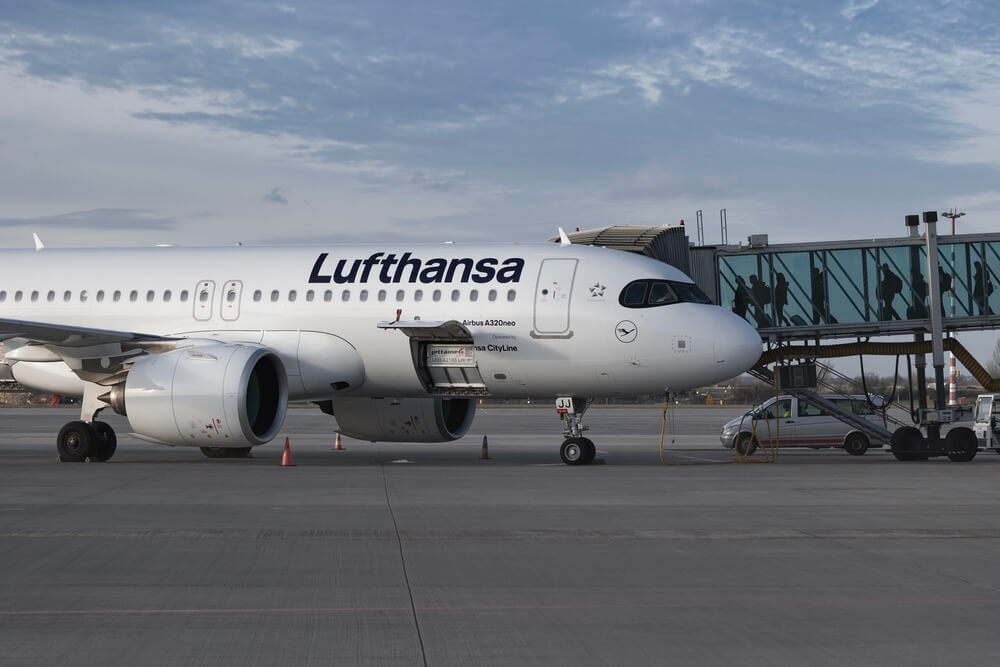
Airlines are rethinking how passengers carry portable batteries after a dramatic onboard fire raised fresh safety concerns. In Europe, Lufthansa is now moving first with stricter rules on power banks, following an incident that shocked the aviation industry earlier this year.
New Limits on Power Banks During Flights
Germany’s flag carrier has announced immediate changes to how power banks and battery packs can be used on its aircraft. Passengers are no longer allowed to use power banks to charge phones, tablets or other personal devices while in the air, nor can they connect them to seatback entertainment systems.
Lufthansa says power banks are still allowed in cabin luggage, but they must not be placed in checked bags, a rule that remains unchanged. In a further tightening of safety measures, travelers are now prohibited from storing power banks in overhead lockers. Instead, the devices must be kept on the passenger or placed in hand luggage under the seat.
Capacity Caps and Carry-On Limits
The airline has also introduced strict limits on battery size and quantity. Power banks are now capped at 100 watt hours, roughly equivalent to 27,000 milliampere-hours. Anyone wishing to travel with larger battery packs must inform the airline in advance and receive approval. Undeclared or oversized batteries risk being confiscated and destroyed.
Passengers are also limited to carrying no more than two power banks per flight. Lufthansa says the changes are based on updated safety guidance from the European Union Aviation Safety Agency.
The new rules apply across the Lufthansa Group, including Swiss, Eurowings, Austrian Airlines, Brussels Airlines, Edelweiss, Discover and Air Dolomiti. Travelers are being advised to charge devices before boarding or rely on the aircraft’s built-in USB ports.
A Fire That Changed Airline Thinking
The policy shift follows a serious incident in January 2025 involving a South Korean Air Busan flight. A power bank stored in an overhead compartment caught fire while the Airbus A321 was still on the ground, injuring 27 people.
Investigators later confirmed that a damaged power bank triggered the blaze. Within minutes, flames spread through the aircraft’s fuselage, forcing passengers to evacuate using emergency slides.
The incident has prompted aviation safety authorities worldwide to reassess the risks posed by lithium batteries onboard. As concerns grow, more airlines are expected to follow Lufthansa’s lead in tightening rules to reduce the chance of similar fires in the future.
