


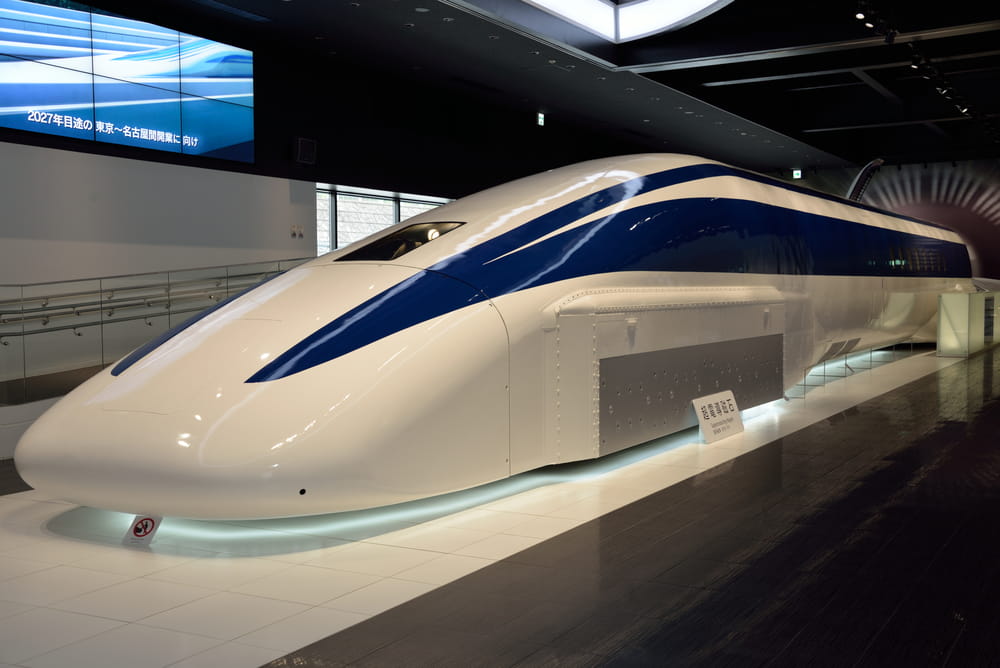
Japan is developing the L0 Series, a next-generation maglev (magnetic levitation) train that could reach speeds of up to 603.5 km/h, making it the fastest train ever built. The project is led by Central Japan Railway Company and is being tested on the new Chuo-Shinkansen line.
If completed, the L0 Series would slash travel times dramatically, cutting the journey between Tokyo and Nagoya to about 40 minutes, and eventually linking Osaka in roughly an hour. By comparison, Europe’s fastest conventional trains, such as France’s TGV or Italy’s Italo, operate at around 300–350 km/h.
The speed comes from maglev technology, which lifts the train above the track using magnets, eliminating wheel-rail friction and allowing extreme acceleration. However, this technology is costly: the project has already exceeded €59bn, and delays mean it is now unlikely to open before 2034–35.
As for Europe, experts are sceptical. Maglev trains cannot run on existing rail lines, requiring entirely new, tunnel-heavy infrastructure and far higher energy use. European rail markets also place greater emphasis on capacity, comfort and scenic travel, not just speed. While ultra-fast routes like London–Paris might benefit, the costs and technical demands make a European version of Japan’s maglev unlikely in the near future.
