


Europe pushes back against unprecedented pressure
European leaders have vowed to stand together after US President Donald Trump threatened a new wave of tariffs unless Denmark agrees to sell Greenland, a move widely seen as an extraordinary escalation that could fracture transatlantic relations. Senior figures across the EU said the bloc would remain united in defending its sovereignty as Washington signalled it was prepared to use trade penalties as leverage.
Trump announced that goods from Denmark, Sweden, Norway, France, Germany, the Netherlands, Finland and the UK would face an additional 10% tariff from February 1, with the rate potentially rising to 25% by June. The measures would remain in place, he said, until a deal is reached for the “complete and total purchase” of Greenland, a semi-autonomous Danish territory.
Greenland dispute sparks trade war fears
The tariff threat follows a joint European mission to Greenland aimed at strengthening Arctic security, which angered the White House. The Trump administration has increasingly argued that the island should fall under US control for national security reasons, dismissing claims that Denmark and its European partners can adequately manage the region.
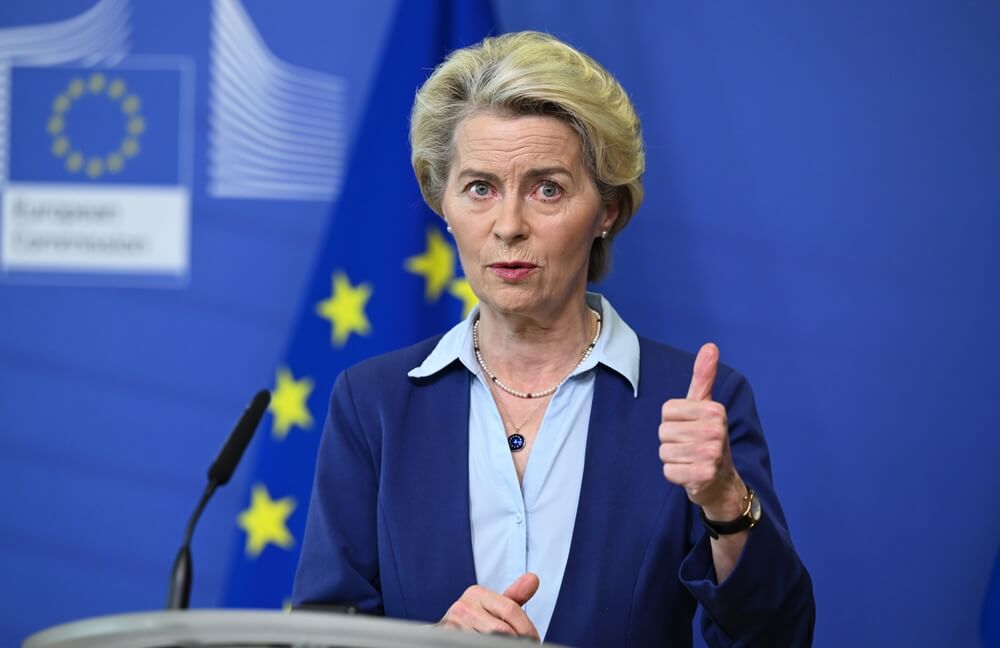
EU leaders warned the move risks triggering a fresh trade war. European Council President António Costa said he would coordinate a collective response, while Commission President Ursula von der Leyen cautioned that tariffs would undermine transatlantic ties and could lead to a dangerous downward spiral. Several leaders, including France’s Emmanuel Macron and Sweden’s Ulf Kristersson, rejected what they described as intimidation and blackmail.
Calls grow for EU to strike back
The confrontation has reignited debate in Brussels over whether the EU should deploy its so-called trade “bazooka,” formally known as the anti-coercion instrument. Introduced in 2023, the tool would allow the bloc to retaliate by restricting access to public contracts, limiting trade licences and curbing access to the single market.
Influential lawmakers argued the latest threats cross a red line. Bernd Lange, who chairs the European Parliament’s trade committee, said trade was being weaponised for political coercion and urged the EU to suspend concessions made to the US. Conservative leader Manfred Weber echoed the call, saying approval of the EU-US trade deal should be frozen until Washington backs down.
