


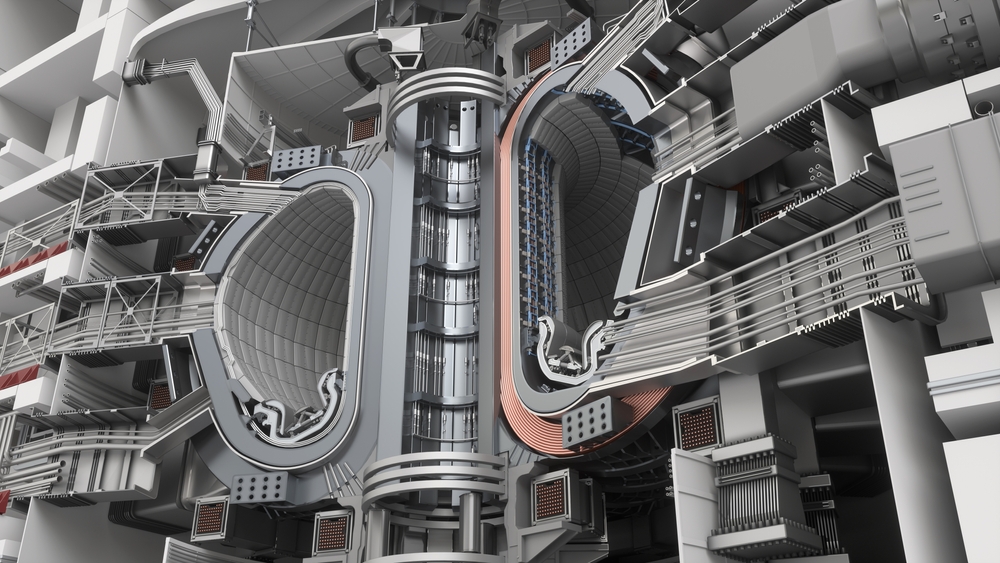
Lawmakers Say Fusion Is Ready for the Next Step
Members of the European Parliament are calling on the EU to take nuclear fusion seriously as a future energy source, arguing that the technology has moved beyond the lab and now needs political support. In a declaration released on Tuesday, lawmakers urged the European Commission to create a clear and stable regulatory framework that would encourage private investment into fusion projects.
The message was delivered during a public hearing in the European Parliament, where MEPs stressed that fusion could play a major role in strengthening Europe’s competitiveness and long-term energy security. With fusion development expected to cost billions, they said investors need certainty before committing large sums of money.
From Scientific Promise to Industrial Opportunity
According to the declaration, fusion energy has reached a turning point, with European industry and private investors increasingly aligned on bringing the technology closer to deployment. What’s missing, lawmakers argue, is firm political backing and practical tools to unlock private capital.
Bulgarian MEP Tsvetelina Penkova said fusion should no longer be viewed as a distant research project, while Germany’s Hildegard Bentele described it as Europe’s chance to turn scientific leadership into industrial strength. Belgian MEP Pascal Arimont added that fusion is now a strategic opportunity to secure clean, safe and reliable energy, and should be developed and rolled out within Europe itself.
Lawmakers also want EU countries to have flexibility when it comes to licensing, safety rules and permitting for future fusion plants, while still operating within a shared European framework.
Why Fusion Is Different from Nuclear Power Today
Fusion energy works by fusing small atoms, such as hydrogen, together to release enormous amounts of energy—the same process that powers the sun. This differs from nuclear fission, which generates power by splitting large atoms and produces long-lasting radioactive waste. While fission is widely used today, fusion is considered cleaner and safer, though it has not yet reached commercial electricity production.
Momentum around fusion has grown since a major breakthrough in the United States in 2022, when scientists achieved a fusion reaction that produced more energy than it consumed. In Europe, Germany is currently leading the charge, striking a €7 billion deal with energy giant RWE to build a pilot fusion plant by 2035.
German Chancellor Friedrich Merz has promised to push for a regulatory framework for fusion both at home and across Europe, arguing that the continent should seize the opportunity rather than fall behind in the race to develop the next generation of clean energy.
