


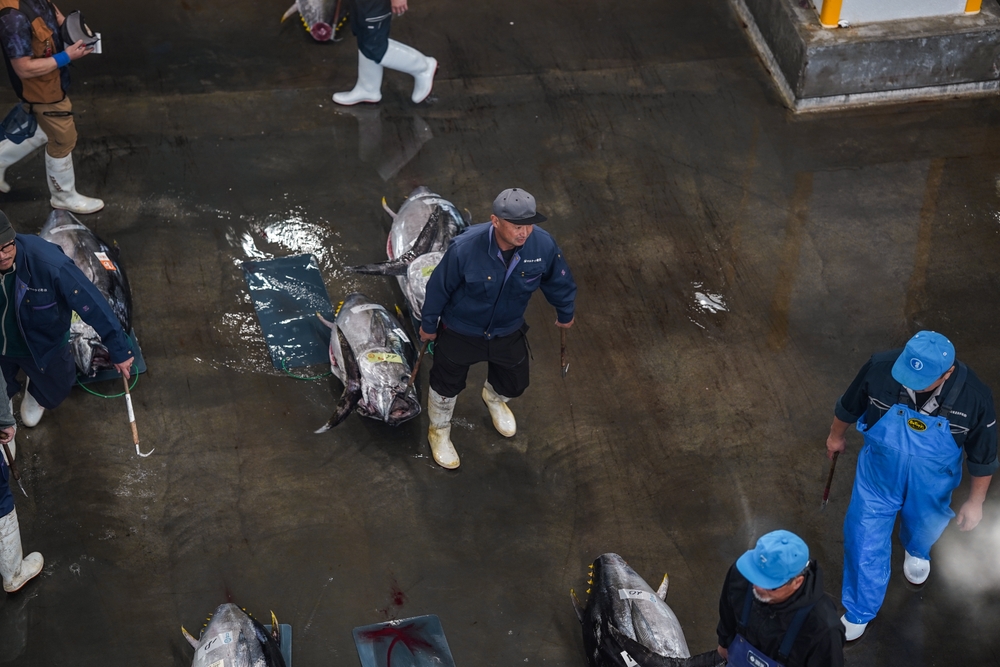
A single bluefin tuna has stolen the spotlight at Tokyo’s annual New Year fish auction, selling for a staggering sum and setting a new benchmark for the famous event.
A jaw dropping moment at Toyosu market
At the first auction of 2026 at Tokyo’s Toyosu fish market, a 243 kilogram bluefin tuna sold for an astonishing 510 million yen, around 2.78 million euros. The sale took place in the early hours of Monday morning, continuing a long tradition in which the New Year auction attracts intense competition and symbolic spending.
The winning bid came from Kiyomura Corp, whose president Kiyoshi Kimura runs the well known Sushi Zanmai restaurant chain. A familiar figure at these auctions, Kimura has claimed the top tuna many times before and once again outbid his rivals, surpassing his own 2019 record of 334 million yen.
Inspecting the catch before the bell
Before the auction began, rows of enormous tuna filled the market floor. Their tails had been trimmed so buyers could examine the flesh, checking colour, texture and fat content as they walked among the fish. When the bell rang, the bidding moved quickly.
The tuna was caught off the coast of Oma in northern Japan, an area renowned for producing some of the country’s finest bluefin. Its final price worked out at about 2.1 million yen per kilogram, reflecting both its quality and the prestige attached to Oma tuna.
Kimura later admitted he had hoped the bidding would stop sooner, but said the price rose rapidly. He described the purchase as partly about good fortune for the year ahead, adding that he simply could not walk away from such an impressive fish.
Tradition, taste and the future of bluefin
Hundreds of tuna are sold every morning at Toyosu, but prices for top grade fish climb sharply during the New Year auction. For buyers like Kimura, the event is as much about celebration and symbolism as it is about business.
Pacific bluefin tuna was once considered a threatened species due to heavy demand, climate pressures and overfishing. In recent years, conservation measures have helped stocks begin to recover, offering cautious optimism that the prized fish can remain a part of Japanese cuisine for generations to come.
