


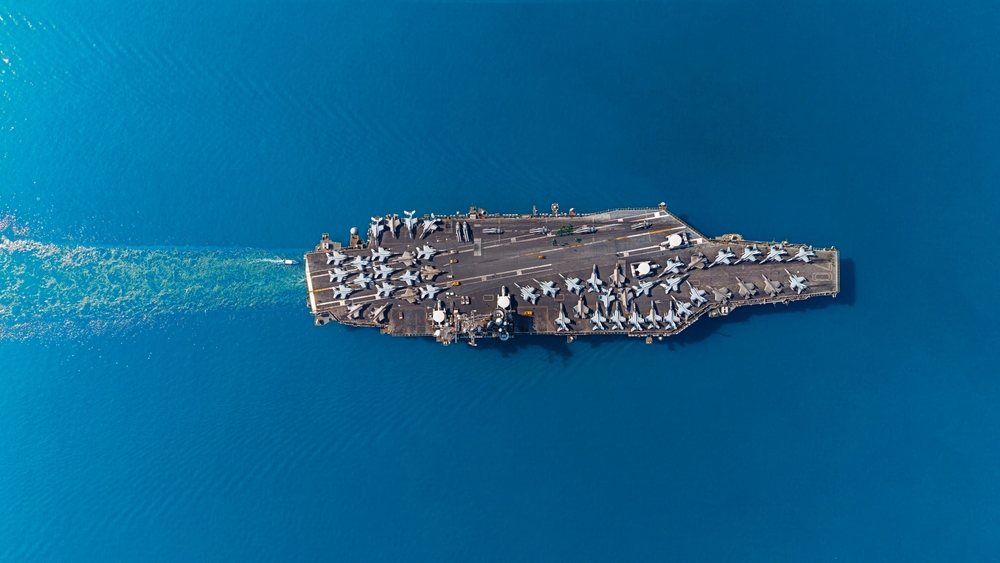
The United States has carried out multiple airstrikes targeting Islamic State–linked militants in northwestern Nigeria, a move that signals a sharp escalation in Washington’s involvement in the country’s worsening security crisis.
US President Donald Trump announced the strikes on Thursday, describing them as “powerful and deadly” operations against militants he accused of carrying out brutal attacks on civilians. In a social media post, Trump said the fighters had been “viciously targeting and killing, primarily, innocent Christians.”
The attacks come as Nigeria’s military continues to grapple with widespread insecurity, fighting several armed groups at the same time across different parts of the country.
Nigerian forces under strain
Nigeria has spent more than a decade battling jihadist and criminal groups, stretching its military and security agencies to their limits. In northwestern states such as Sokoto, the military regularly launches airstrikes against militant hideouts, while the government has increased recruitment to reinforce its forces.
Despite these efforts, the scale of violence has remained difficult to contain. The US strikes are therefore seen as a critical show of support for Nigerian troops, who are often outnumbered and outgunned in remote and hard-to-reach areas.
Trump had previously ordered the US military in November to prepare for action in Nigeria as part of broader efforts to counter Islamist extremist groups operating in the region.
Growing security cooperation
Nigeria’s foreign ministry confirmed on Friday that the strikes were carried out as part of ongoing security cooperation with international partners, including the United States. The ministry said this collaboration had resulted in “precise attacks on terrorist targets” in the northwest.
President Bola Ahmed Tinubu reiterated that Nigeria is a religiously tolerant nation, emphasizing that the country’s security challenges affect people regardless of faith or region.
The United States has in the past designated Nigeria a “Country of Particular Concern” over violations of religious freedom, a status that can trigger sanctions. Trump has repeatedly argued that extremist violence poses a serious threat to Christians in Nigeria, though local officials and analysts say the conflict impacts both Christian and Muslim communities.
A complex and deep-rooted conflict
Armed groups such as Boko Haram and the Islamic State of West Africa Province have terrorized northeastern Nigeria for years, killing thousands of people. Conflict data shows that many of those killed have been Muslims, highlighting the indiscriminate nature of the violence.
In the northwest, another Islamic State affiliate known as the Islamic State’s Sahel Province, locally referred to as Lakurawa, has gained influence. US and Nigerian authorities have not said which specific group was targeted in the latest strikes.
Experts say militants often exploit the absence of state authority in remote areas, where poverty, hunger, and unemployment are widespread. These conditions create fertile ground for recruitment and sustained violence.
Nigeria’s Defence Minister, Christopher Musa, has previously warned that military action alone cannot resolve the crisis, estimating that force accounts for only about 30% of the solution, with the rest dependent on improved governance, development, and addressing the underlying causes of insecurity.
