


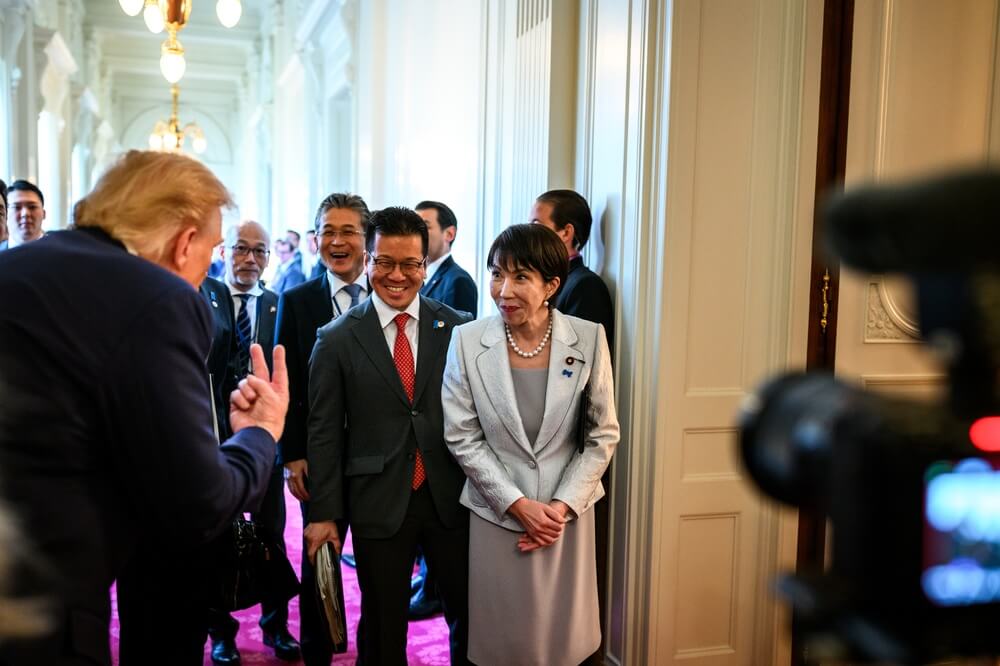
A commanding result for the ruling party
Prime Minister Sanae Takaichi was heading for an overwhelming victory in Japan’s snap election, with projections showing her ruling Liberal Democratic Party (LDP) and its allies securing a two-thirds majority in the lower house. Media estimates put the LDP at around 300 of the chamber’s 465 seats, a dramatic jump from its previous tally and its strongest performance since 2017, during the tenure of former prime minister Shinzo Abe. The result restores the party’s grip on power and could even give it a super-majority without relying on junior partners.
LDP secretary general Shunichi Suzuki said voters had endorsed Takaichi’s “responsible and proactive” fiscal approach, along with her push to strengthen Japan’s defence capabilities. Meanwhile, the main opposition bloc suffered heavy losses, while the small anti-immigration Sanseito party appeared to make modest gains.
A personal boost for Japan’s first woman prime minister
Since taking office last October, the 64-year-old Takaichi has revived the LDP’s popularity after years of voter frustration over rising prices and political scandals. Once seen as part of the party’s ultra-conservative fringe, she has struck a chord with voters, particularly younger ones, helped by her blunt style and unconventional background.
Her government moved quickly to address economic concerns, rolling out a $135 billion stimulus package and promising to suspend the consumption tax on food. Still, expectations are high. Japan’s public debt remains more than twice the size of its economy, and recent spikes in long-term bond yields have unsettled financial markets at home and abroad.
China tensions loom after decisive victory
Takaichi’s strong mandate could also complicate relations with Beijing. Known for her hawkish stance on China, she sparked anger there shortly after taking office by suggesting Japan might intervene militarily if China attempted to seize Taiwan by force. China responded sharply, summoning Japan’s ambassador, issuing travel warnings, holding joint military drills with Russia and even recalling its remaining pandas from Japan.
With domestic power now firmly secured, Takaichi faces the challenge of balancing economic reform, market confidence and an increasingly delicate relationship with China as she begins the next phase of her leadership.
