


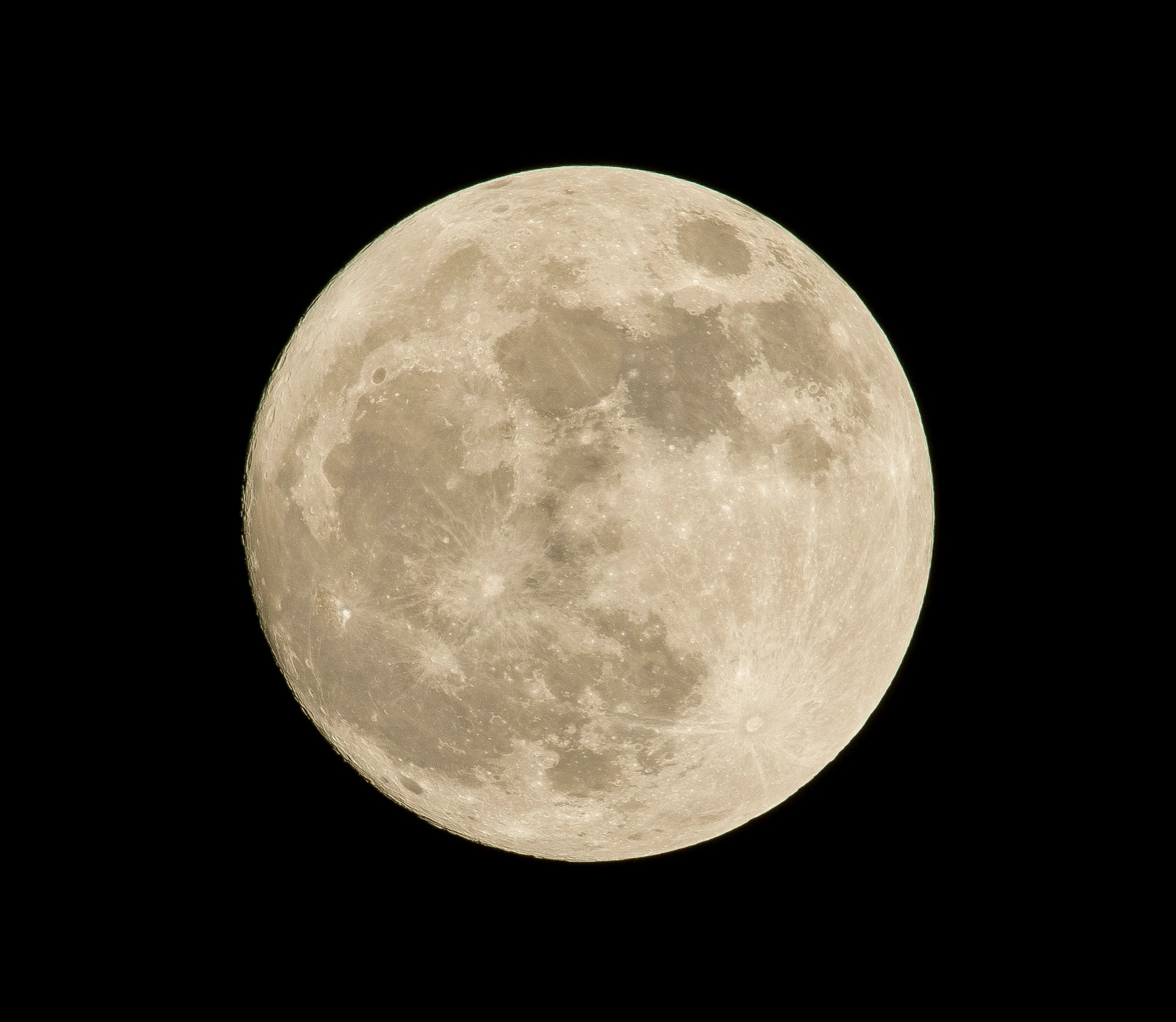
Scientists believe the vanished planet Theia helped form the Moon billions of years ago.
Theia left no direct chemical traces, which forced researchers to study ancient rocks instead.
A team from France, Germany and the United States analysed lunar and terrestrial samples to determine Theia’s birthplace.
New findings indicate that Theia probably formed much closer to the Sun than previously assumed.
Researchers now argue that Theia emerged in the inner Solar System before colliding with early Earth.
For decades, scientists have supported the giant impact theory to explain the Moon’s formation.
That theory states that Theia struck the young Earth about 4.5 billion years ago.
Debris from the collision created the Moon and mixed Theia’s material with Earth’s surface.
Analyses of Apollo samples more than 50 years ago strengthened this idea.
However, Theia’s disappearance left scientists without direct chemical evidence to confirm its origin.
Researchers continued to debate Theia’s composition and location because the data remained incomplete.
The international team used new analytical methods to track Theia’s likely starting point.
Tracing an Ancient Collision
Jake Foster of the Royal Observatory Greenwich praised the research for its precision.
He noted that scientists can now identify Theia’s origin despite its destruction billions of years ago.
He explained that the research paints a clearer picture of early Earth.
He also highlighted how the findings reveal Theia’s likely position in the Solar System.
The study used isotopes from Earth rocks and Apollo lunar samples to reconstruct the past.
These isotopes act as chemical identifiers that show how materials formed.
Researchers already knew that Earth and Moon samples share nearly identical isotope ratios.
That similarity made separating Theia’s material from Earth’s early composition extremely challenging.
The team applied a process that resembles planetary reverse engineering.
They examined isotopes of iron, chromium, zirconium and molybdenum in great detail.
They modelled hundreds of early-Solar-System scenarios to see which matched current isotope patterns.
These patterns vary because regions near the Sun formed under different conditions than outer regions.
A New View of Planetary Origins
By comparing these isotope variations, the team concluded that Theia formed closer to the Sun than Earth.
Some earlier theories suggested Theia developed farther from the Sun, but the new data contradicts this.
The results imply that Theia once occupied an inner region of the Solar System with hotter conditions.
Researchers believe the study deepens understanding of how rocky planets grow and interact.
They also expect these findings to guide future investigations into planetary evolution.
The analysis may help scientists understand how collisions shape the architecture of young solar systems.
Experts hope the work inspires more studies on how planets change during their earliest stages.
This research offers a clearer path toward uncovering how Earth and the Moon formed long ago.
