


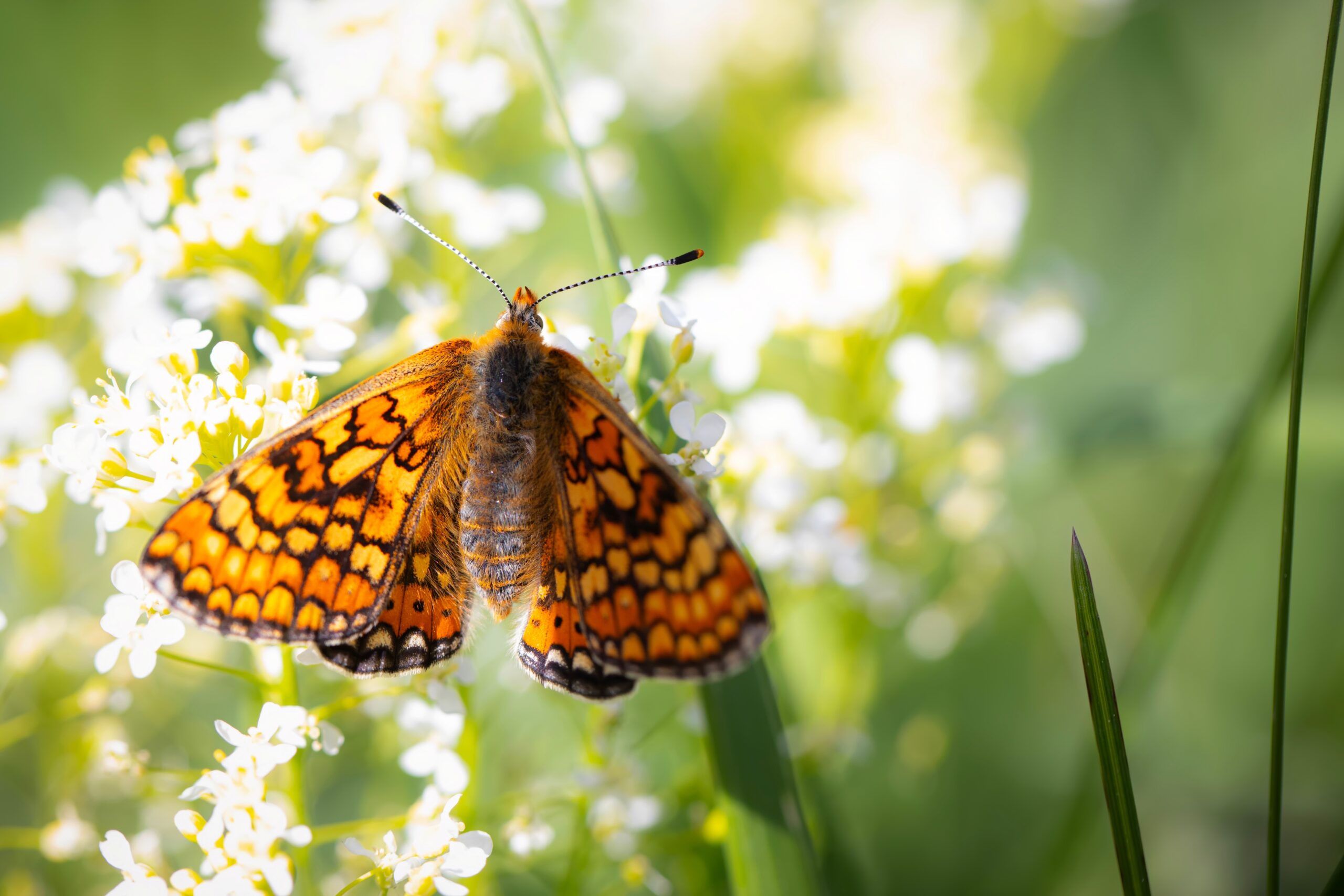
The endangered Marsh Fritillary butterfly has had a strong year in Northern Ireland, thanks to warm weather and long-term conservation work. Once widespread, the species declined sharply as farming practices changed and its only food plant—Devil’s-bit Scabious—became scarce.
Surveys by Butterfly Conservation show major increases in caterpillar nests on managed sites. One farm saw numbers rise from 24 to 53, while another jumped from 24 to 139. Conservation manager Rose Cremin said the results highlight the importance of proper habitat management, not just good weather.
Volunteers count the silken webs where up to 100 caterpillars gather and feed, giving a clear picture of population health. Because the Marsh Fritillary produces only one brood a year, it is highly vulnerable to habitat loss. Despite recent gains, the species has lost 43% of its range since 1985, and most UK butterflies remain in long-term decline.
