


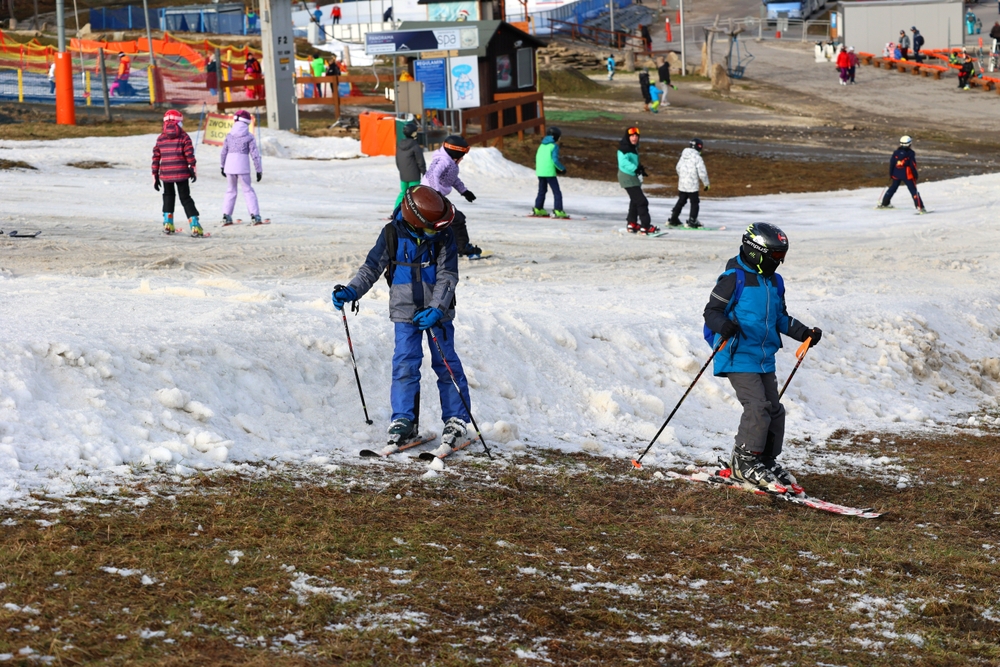
Europe’s iconic ski resorts are being forced to adapt fast as rising temperatures and dwindling snowfall threaten the foundations of winter tourism. While some destinations are still enjoying picture-perfect conditions this season, many others are grappling with a new reality: snow can no longer be taken for granted.
The Olympics Shine a Spotlight on a Warming World
With the Winter Olympics set to open in Milan–Cortina on 6 February, the slopes around Cortina d’Ampezzo — often called the jewel of the Dolomites — are currently covered in snow. But such scenes are becoming increasingly rare. Across the Alps, natural snowfall is more unpredictable, and even when it does arrive, it often doesn’t last.
To keep slopes open, resorts are relying more heavily on artificial snow. While effective, snowmaking comes at a high financial and environmental cost, pushing ski pass prices higher and making winter sports less accessible for many Europeans.
The International Olympic Committee has acknowledged that climate change — largely driven by fossil fuel use — is reshaping the future of winter sports. A 2021 study by the University of Waterloo found that of the 21 cities that have hosted the Winter Olympics since 1924, only four would still be suitable by mid-century without major climate action. Under the worst-case warming scenario of 4°C, nearly all former host cities would be ruled out by 2080, leaving only Sapporo in Japan as a viable option.
Even if global warming is limited to 2°C under the Paris Agreement, fewer than half of past Olympic locations would remain suitable by 2050.
Europe’s Mountain Economies Under Pressure
The Olympic Games may only last a few weeks, but for communities across Europe’s mountain regions, winter tourism is a year-round lifeline. The continent’s ski industry generated around €180 billion in 2022, with the Alps at its heart.
The Alpine region spans seven countries and is home to around 80 million people, providing not only jobs and tourism revenue but also vital water resources and biodiversity. Germany has the highest number of ski resorts in Europe, followed by Italy and France, with Austria, Switzerland and the Nordic countries also heavily invested in winter sports.
But the outlook is increasingly bleak. A 2023 study in Nature Climate Change warned that more than half of Europe’s 2,234 ski resorts face a high risk of snow shortages under a 2°C warming scenario. In the French Alps, around one in three resorts could become unviable, while nearly 90 percent of resorts in the Pyrenees are at risk. If global temperatures rise by 4°C, almost all European ski resorts would struggle to operate at all.
Snowmaking, Rising Costs and a Tough Road Ahead
Artificial snow may keep slopes open, but it places enormous strain on water and energy supplies. According to WWF, covering just one hectare of slope with around 30 centimetres of snow requires at least one million litres of water. Repeated snowmaking can consume as much water as a large city uses in a year.
Snow cannons also demand vast amounts of electricity, adding to greenhouse gas emissions and reinforcing the cycle of climate change. Estimates suggest that supplying artificial snow across the Alps would require around 600 gigawatt-hours of electricity annually — equivalent to the yearly consumption of 130,000 households.
These costs are increasingly being passed on to skiers. Since 2015, the price of skiing in Europe has risen by nearly 35 percent, well above inflation, with the sharpest increases seen in Switzerland, Austria and Italy. For many families, traditional ski holidays are becoming unaffordable.
Recognising the growing pressure on resources, the European Union has called for better coordination in managing shared water systems across the Alpine region. But as winters continue to warm, ski resorts face a difficult choice: invest heavily in artificial snow, reinvent themselves as year-round destinations, or risk being left behind in a rapidly changing climate.
