


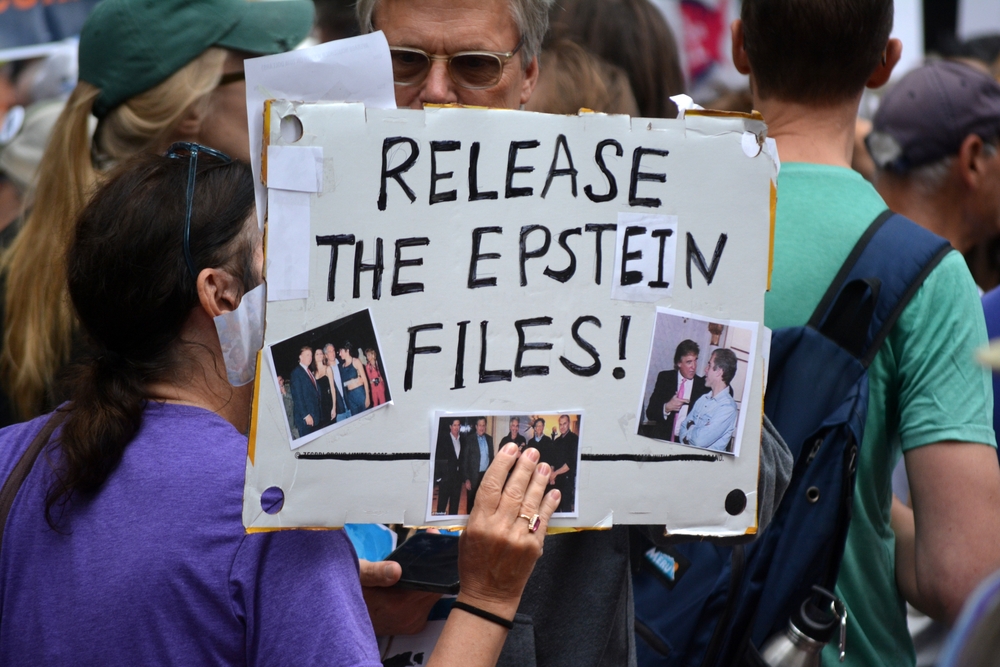
A Long-Awaited Disclosure Sparks New Anger
The US Justice Department has released thousands of photos and documents tied to disgraced financier Jeffrey Epstein, reigniting demands for full transparency. Many of the newly published images feature former president Bill Clinton, prompting renewed scrutiny, but lawmakers from both parties say the disclosure remains incomplete and overly redacted. The Justice Department released the material on Friday after years of public pressure, yet the limited scope of the files quickly frustrated critics who expected a far broader release.
The documents include photographs, call logs, court records and investigative material, much of it partially blacked out. Officials said they will continue releasing additional records in the coming weeks. Democrats accused the Trump administration of withholding damaging information, while the department insisted it is complying with the law and working toward a complete disclosure by the end of the year. The release follows sustained campaigning by lawmakers and advocacy groups seeking transparency around Epstein’s crimes and his relationships with powerful figures.
Trump, Congress and a Missed Deadline
President Donald Trump resisted releasing the Epstein files for months, despite acknowledging a past friendship with Epstein that later ended. Trump has never been accused of wrongdoing related to Epstein and has repeatedly argued that the files contain nothing of public interest. Under mounting pressure from Congress, he signed legislation on November 19 requiring the Justice Department to release most Epstein-related records within 30 days. The White House described Friday’s disclosure as proof that the administration is the “most transparent in history.”
Before the deadline, Deputy Attorney General Todd Blanche told Fox News that several hundred thousand files would be released immediately, with more to follow. In practice, far fewer documents appeared online. Blanche later admitted in a letter to Congress that the production was incomplete, while the department said it expects to finish releasing the material by year’s end. Lawmakers noted that the law clearly set Friday as the deadline, increasing frustration over what they described as noncompliance.
What the Files Contain and Who Appears
The initial release includes roughly 4,000 files, most of them photographs categorized under a section labeled “DOJ Disclosures.” FBI agents took many of the images during searches of Epstein’s homes in New York City and the US Virgin Islands. Other photos show envelopes, folders and boxes containing investigative materials. Officials heavily redacted documents to remove identifying details about victims, and they excluded explicit material depicting abuse.
Several images show Bill Clinton, who previously acknowledged traveling on Epstein’s private jet but has said through a spokesperson that he had no knowledge of Epstein’s crimes. Photos include Clinton on a private plane with a woman whose face is obscured, in a swimming pool with Ghislaine Maxwell and another unidentified person, and in social settings with figures such as Michael Jackson and Diana Ross. Another image shows Clinton in a hot tub with an unidentified woman. The Justice Department offered no explanation of how these images relate to its investigation.
White House aides quickly highlighted the Clinton photos online. Press secretary Karoline Leavitt reacted to one image with the words “Oh my!” and a shocked emoji. Clinton’s deputy chief of staff, Angel Ureña, pushed back, writing on X that “this is not about Bill Clinton” and accusing the administration of shielding others. “There are two types of people here,” Ureña wrote. “The first group knew nothing and severed relations with Epstein before his crimes came to light. The second group continued relations with him afterwards. We are part of the first one.” Clinton has never faced accusations connected to Epstein, and officials stress that appearing in the files does not imply wrongdoing.
The release contains few references to Trump, and no new images of him. The limited photos that include Trump have circulated publicly for years. Trump did not mention the document release during a rally in North Carolina on Friday night. The files also include at least one image of Britain’s Prince Andrew, whom Epstein accuser Virginia Giuffre alleged was involved in sexual encounters arranged by Epstein. Prince Andrew has denied wrongdoing.
Victims and Lawmakers Demand More
Survivors and lawmakers reacted with anger to the partial disclosure. Marina Lacerda, who says Epstein sexually abused her beginning when she was 14, called the release inadequate. “Just release the files,” she said. “And stop blacking out names that don’t need to be blacked out.” Members of Congress echoed that frustration. Representatives Ro Khanna, a Democrat from California, and Thomas Massie, a Republican from Kentucky, both criticized the Justice Department’s compliance. Massie wrote that the release “grossly fails to comply with both the spirit and the letter of the law,” while Khanna called it “disappointing” and vowed to keep pressing for full disclosure.
Senator Jeff Merkley of Oregon said missing the deadline denies justice to Epstein’s victims and promised to pursue all legal options to force transparency. Lawmakers could take the Justice Department to court, though such a process would likely stretch on while additional files trickle out. Separately, the House Oversight Committee has issued a subpoena for Epstein-related documents, creating another potential path to compel disclosure, but that effort would require Republican support to move forward against a Republican administration.
